
Momentum on a 20-point peace plan to end the war between Russia and Ukraine is faltering after President Vladimir Putin accused Kyiv of targeting a residence linked to him, a claim Moscow says leaves little room for compromise at the negotiating table.
The accusation comes as Ukrainian President Volodymyr Zelenskyy has been pressing a 20-point peace proposal as a counteroffer to a 28-point framework floated by the Trump administration before Thanksgiving. Zelenskyy was expected to present the plan directly to President Donald Trump during a meeting at Mar-a-Lago, part of what he described as ‘some of the most active diplomatic days of the year.’
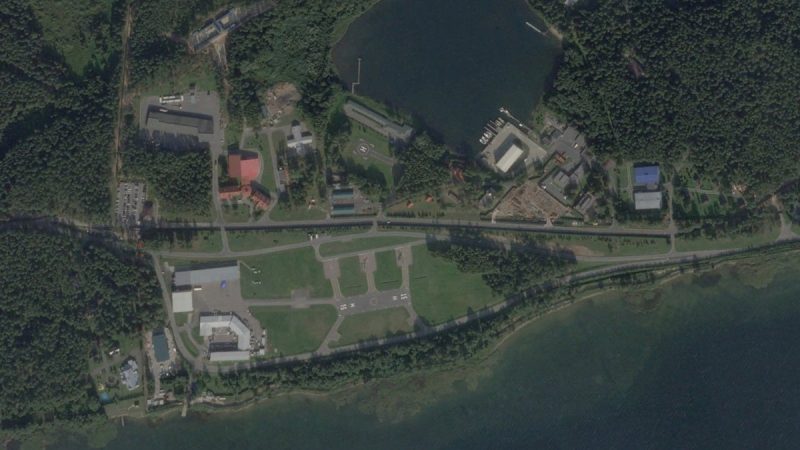
Russia claims Ukraine launched a large-scale drone attack early Monday against a presidential residence in the Novgorod region, involving 91 long-range drones that were intercepted by Russian air defenses.
Russia’s defense ministry released footage of a masked soldier standing next to drone wreckage it said was recovered from the attack, claiming the drone carried a high-explosive warhead ‘filled with a large number of striking elements’ intended to hit civilian targets.
The Kremlin has described the site as a presidential residence in the Novgorod region, one of several state-owned properties associated with Putin, though it has not said he was present at the time.
Kremlin officials quickly branded the incident ‘terrorist’ activity, warning it would force Russia to harden its negotiating position.
‘This terrorist action is aimed at collapsing the negotiation process,’ Kremlin spokesperson Dmitry Peskov told reporters Tuesday. ‘The diplomatic consequence will be to toughen the negotiating position of the Russian Federation.’
Zelenskyy’s proposal calls for Western-backed security guarantees resembling NATO’s Article 5, a halt in fighting along current battle lines in contested regions, and the creation of demilitarized zones overseen by international forces — provisions Moscow has long opposed. The Ukrainian plan also rejects formal recognition of Russian control over occupied territory, a key point of divergence from the U.S. framework.
Ukraine has flatly denied responsibility for the alleged attack. Foreign Minister Andrii Sybiha said Russia has offered no evidence ‘because there’s none,’ accusing Moscow of leaning on a familiar strategy.
‘Russia has a long record of false claims — it’s their signature tactic,’ Sybiha said in a post to the social platform X.
Zelenskyy told reporters that Ukraine had discussed the allegation with U.S. officials. ‘They’ve talked through the details. And we understand that it’s fake. And thanks to their technical opportunities, they can verify that it’s fake,’ he said.
Ukrainian officials argue the allegation fits a broader Kremlin playbook: using unproven claims to justify escalation or deflect blame as diplomacy intensifies. Kyiv has warned Moscow may be using the episode to lay the groundwork for new strikes, including against government buildings in the Ukrainian capital, while portraying Russia as the aggrieved party in peace talks.
The dispute has also drawn in Trump, who met with Zelenskyy in Florida Friday and later spoke by phone with Putin. Putin raised the alleged incident during their call.
‘I was very angry about it,’ Trump told reporters, adding that the U.S. was still working to determine what actually happened. ‘We’ll find out,’ he said.
Matthew Whitaker, the U.S. ambassador to NATO, said on Fox Business that Washington is investigating Russia’s claim.
‘It’s unclear whether it actually happened,’ Whitaker said. ‘We’re going to get to the bottom of the intelligence.’