
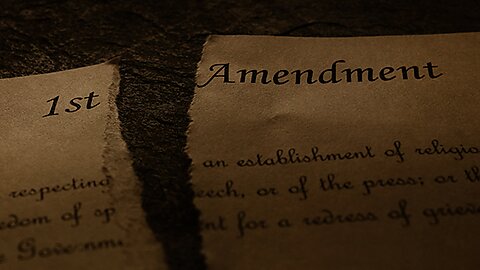
A couple of weeks ago, I warned that excessive limits on what constitutes a search or seizure under the Fourth Amendment endanger the freedom of association under the First Amendment. A new executive order issued by President Trump on September 26 confirms this.
The order begins by alleging the existence of “sophisticated, organized campaigns of targeted intimidation, radicalization, threats, and violence designed to silence opposing speech, limit political activity, change or direct policy outcomes, and prevent the functioning of a democratic society.” These campaigns reflect “anti-fascist” ideology, marked by “anti-Americanism, anti-capitalism, and anti-Christianity; support for the overthrow of the United States Government; extremism on migration, race, and gender; and hostility towards those who hold traditional American views on family, religion, and morality.”
The order directs joint terrorism task forces to “coordinate and supervise a comprehensive national strategy to investigate, prosecute, and disrupt entities and individuals engaged in acts of political violence and intimidation.” Task forces shall “investigate” efforts that include “isolating and dehumanizing specific targets to justify murder or other violent action against them,” taking place through “anonymous chat forums, in-person meetings, social media, and even educational institutions.” The order requires an investigation into donors and employees of groups that “are responsible for, sponsor, or otherwise aid and abet” the activities described above. Anti-terrorism efforts will prioritize “organized doxing campaigns, swatting, rioting, looting, trespass, assault, destruction of property, threats of violence, and civil disorder.”
The order is nakedly aggressive: “Through this comprehensive strategy, law enforcement will disband and uproot networks, entities, and organizations that promote organized violence, violent intimidation, conspiracies against rights, and other efforts to disrupt the functioning of a democratic society.” (As I’ve noted previously, laws against conspiracies, organized criminal activity, and the like are so overbroad that what violates them often depends on the eye of the beholder.)
My colleague Walter Olson has identified how the new order targets speech and association that are protected by the First Amendment. “Isolating and dehumanizing” people through critical speech, accurately reporting the names of immigration agents (which some Trump allies consider to be terroristic “doxing”), talking in ways that the government might try to characterize as “justifying” crimes—all of these activities are usually constitutionally protected.
But here’s the problem. The Supreme Court has not yet proven willing to name as searches and seizures:
Having agents, or drones, watch someone’s every move;
Putting up hidden cameras outside homes and offices;
Secretly demanding financial and internet records;
Using cellphone data to track every person visiting an organization or attending its events; and
Adding people to secret lists that keep them from exercising their constitutional rights to travel and have firearms.
Only once the government stops someone on the street or kicks in their door do they enjoy protection under the Fourth Amendment. Up until that point, the government is basically free to investigate without constitutional limits—even when it does so based entirely on retaliation for First Amendment activities.
The Supreme Court has said as much. In 1972’s Laird v. Tatum, the Court considered the constitutionality of an executive order directing the Army to investigate “public activities that were thought to have at least some potential for civil disorder” (a situation similar to the one posed by the new executive order). The Court held that there can be no judicial relief for an American who “alleges that the exercise of his First Amendment rights is being chilled by the mere existence, without more, of a governmental investigative and data-gathering activity.” The government can be challenged in court only if it acts in a “regulatory, proscriptive, or compulsory” way.
Justice Marshall extended Laird in his 1974 solo opinion in Socialist Workers Party v. Attorney General. There, a radical political party brought suit to bar the FBI from sending undercover agents into one of its conventions. While Justice Marshall noted the dangers to speech and association posed by undercover investigations—and though he had dissented in Laird—he decided that “our abhorrence for abuses of governmental investigative authority cannot be permitted to lead to an indiscriminate willingness to enjoin undercover investigation.”
The Court established another barrier to relief in its 2013 decision, Clapper v. Amnesty International USA. In that case, federal law authorized the government to gather intelligence against foreigners outside of the United States. Civic organizations sued on the basis that they engaged in “sensitive international communications with individuals who they believe are likely targets of surveillance.” The Court held that their concerns about surveillance were “too speculative” for them to challenge the law. By hiding the subjects of its investigations, then, the government can keep any group from showing that it is under the very surveillance necessary for it to challenge that surveillance.
The difficulties these barriers pose are apparent even from a case that favored challengers. In 2015’s Hassan v. City of New York, the Third Circuit held that the government violated the constitutional rights of Muslim organizations by subjecting them to undercover investigations after the 9/11 attacks. However, that decision held that “surveillance in public places may not of itself violate any privacy rights.” The main problem was that the surveillance at issue was based on religion—discrimination that the court held violated equal protection and the First Amendment’s Religion Clauses. Hassan leaves groups targeted for secular reasons, such as the Trump administration’s intolerance of leftists, with no avenue to relief.
All of these decisions stand for a principle that may be defensible: generally, the government can direct preliminary scrutiny toward groups as it sees fit. As long as that scrutiny remains limited to tacking photos up on whiteboards and scribbling notes on sticky notes, perhaps courts should have only quite limited powers to interfere. However, that only reinforces the importance of drawing bright lines that the government can’t cross without having to answer for its actions.
Once agents start uncovering hidden information about people, they should be deemed to have committed a search. Once officials restrict someone’s liberty, they should be deemed to have committed a seizure. At that point, the Fourth Amendment should open the courtroom doors. Continuing to instead define the Fourth Amendment’s protection more narrowly will set the price of First Amendment rights as surveillance, harassment, and intimidation, with no hope of relief.