
Akiva Malamet, Bautista Vivanco, and Michael F. Cannon
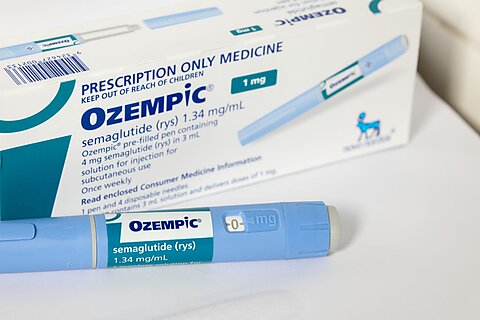
The Trump administration is planning to expand Medicare and Medicaid coverage of expensive weight-loss drugs like Ozempic under a five-year experiment, according to documents the Washington Post obtained from the Centers for Medicare and Medicaid Services.
While Ozempic and other GLP‑1 drugs are great at helping patients lose weight (among many other promising uses), these impressive medications come with an impressive price tag. For those paying out of pocket, a month’s supply can cost around $1,000.
Congress prohibits Medicare from subsidizing anti-obesity medications but allows GLP‑1 drugs for the treatment of diabetes and cardiovascular disease (a particularly vulnerable subset of its beneficiary population). The Congressional Budget Office studied the budgetary impact of authorizing Medicare to subsidize anti-obesity medications. It concluded that subsidizing GLP‑1 drugs for obesity would have a net cost to taxpayers of $31.5 billion between 2026 and 2034.
Trump is not alone in trying to irresponsibly expand spending this way. Back in 2024, the lame duck Biden administration proposed doing the same thing. As one of us (Cannon) wrote at the time: “If Medicare bureaucrats finalize this proposal, it would not merely “allow” subsidies. It would compel taxpayers to finance them through Medicare and Medicaid, contrary to federal law and the Constitution.”
Cannon also notes that the government could increase access to these drugs; not by subsidizing them, but by getting out of the way:
“In the meantime, the federal government can increase access to GLP-1s simply by eliminating unnecessary regulation — specifically, regulations requiring consumers to obtain prescriptions before purchasing them.”
More recently, our colleague Jeffrey Singer argued that Congress can and should eliminate FDA barriers for compounding pharmacies. Singer also emphasized the benefits of removing prescription requirements. Combined, these reforms would significantly increase competition and render GLP-1s more accessible.
In a competitive market, price-sensitive patients put downward pressure on the prices of the medical goods and services they need or want. Medicare, Medicaid, and the tax exclusion for employer-sponsored health insurance create multiple levels of separation between patients and the price of medical goods and services. The more insensitive patients are to the price of care, the less pressure they put on providers to reduce prices. This makes health care more expensive and less accessible for everyone.
For example, when the Affordable Care Act (ACA) mandated that most health insurance plans cover all FDA-approved contraception without any cost-sharing, prices for hormones and oral contraceptives skyrocketed.
Authorizing both Medicare and Medicaid to expand GLP‑1 subsidies would add even more fat to our already bloated and indebted government, all the while distorting important price signals in the pharmaceutical market. Such price signals, combined with greater price sensitivity among consumers, are key to making health care more affordable, accessible, and universal, especially for patients most in need.
For more on this topic, read Cannon’s chapter in Cato’s “The War on Prices” to learn about how government price fixing is the rule in U.S. health care, and “Drug Reformation,” on how prescription requirements raise prices and limit access.