
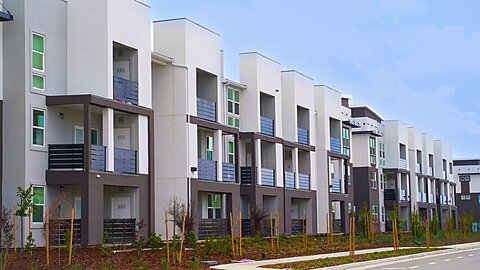
A Washington Post investigative piece confirms what we’ve been saying for years at Cato about federal housing subsidies. The $14 billion a year low-income housing tax credit (LIHTC) drives cost inflation in “affordable” housing projects.
The WaPo article focuses on subsidized DC projects with costs ranging from $700,000 to $1.3 million per unit, as shown in the table. The piece compares those high costs with the average DC home value of $616,567 and an unsubsidized DC project costing $350,000 per unit.
I testified about high costs and other LIHTC failings at a recent hearing chaired by Rep. Glenn Grothman (R‑WI). He agrees that the program is “outdated, costly, and ineffective” and primarily enriches developers and banks. Unfortunately, the House reconciliation bill would boost the program by $14 billion over 10 years rather than eliminate it.
The LIHTC is following a common pattern: 1) A federal program isn’t solving a problem; 2) lobby groups claim the reason is underfunding; and 3) Congress falls for the ruse and expands the program without proper scrutiny.
Here are excerpts from the WaPo story:
In the heart of D.C., along a narrow street in the affluent Adams Morgan neighborhood, a scaffolding rises above the sidewalk near increasingly expensive homes. The 52-unit building under construction will house people making far below the area’s median income.
… But the building’s development cost is enough to make the neighborhood’s wealthier residents blink: $1.2 million per apartment. That tab will be picked up in large part by taxpayers, most of whom could not afford to live in such a place. It’s an example of a trend in expensive cities across the nation, including San Francisco and Chicago, where costs to house the poor are approaching and at times exceeding $1 million per unit — resulting in fewer affordable housing units being built at a time of urgent need, housing experts say.
The D.C. building, called Ontario Place, will include a rooftop aquaponics farm to produce fresh fruits and vegetables for its tenants, whose rents will be capped at well below market rates. Two nearby buildings by the same developer, D.C. nonprofit Jubilee Housing, have run up a development price tag of $1.3 million for each of 50 apartments, city records show.
… While Ontario Place and EucKal appear to feature among the costliest affordable housing units in the country, a Post review of city documents showed half a dozen other buildings with development costs per unit between $700,000 and $1 million. Meanwhile, the average D.C. home value is $616,567, according to Zillow.
… it has also become commonplace for government-subsidized housing to cost much more to build than that of the private market, housing experts say. In Chicago, a 43-unit building in East Garfield Park is projected to cost about $900,000 per apartment, city records show. In San Francisco, several buildings have exceeded the $1‑million-per-unit mark, according to that city’s Citywide Affordable Housing Loan Committee.
Among key drivers of such high prices are the financing costs associated with using Low-Income Housing Tax Credits, which over the past few decades has become the low-income housing industry’s primary funding source.
… “When you look at a deal structure, almost everyone else in the deal makes more money when costs go up,” [executive director of the New Jersey Housing and Mortgage Finance Agency Melanie] Walter said. “They charge as a percentage on the financing side. Attorneys’ fees go up based on the deal size.”
… In Northeast Washington, a 151-unit housing development under construction called Edgewood Commons V will cost about $815,000 per apartment, funded mostly by tax credits and other subsidies, according to city records.
… Another tax-credit project in Southeast Washington, the Ethel, cost nearly $800,000 per unit, all 100 of which are one-bedrooms.
… Next door, the same developers built the Park Kennedy, for mostly market-rate tenants, at a per-unit cost of about $350,000, records show.