
The promise of the American legal system is often visualized as a level playing field, but two recent developments at the Supreme Court—the ruling in USPS v. Konan and the procedural fallout from the Court’s refusal to reconsider the Second Circuit’s grant of qualified immunity in NRA v. Vullo—suggest that the ground is tilting sharply in favor of the state. Taken together, these cases illustrate a growing invincibility gap, where government officials can violate constitutional rights or engage in a pattern of discriminatory behavior while remaining shielded by a complex web of immunity doctrines.
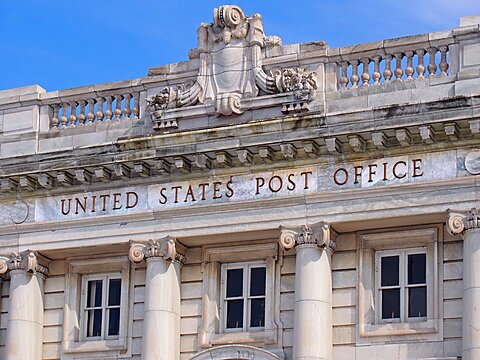
This week, the Supreme Court handed down its decision in USPS v. Konan, a case that began with harrowing allegations. Lebene Konan, a landlord in Texas, claimed that postal workers had engaged in a targeted, racially motivated campaign to withhold mail from her and her tenants. This was not a matter of a missing letter or two; it was an allegation of intentional, systemic discrimination by federal employees using their official positions to cause harm.
However, the Court’s opinion focused not on the alleged racism but on the letter and spirit of the Federal Tort Claims Act (FTCA). Under the FTCA, the federal government generally waives its sovereign immunity to be sued, but the statute is rife with exceptions. This includes the “postal exception,” which bars claims regarding the “loss, miscarriage, or negligent transmission” of mail. The Court ruled that even if the withholding of mail is intentional and discriminatory, it still falls under the definition of “loss” or “miscarriage.” By expanding this definition, the Court effectively told citizens that the Post Office can be used as a tool for harassment without the agency ever having to pay a dime in damages. It created a world where the government’s sovereign immunity is so broad that it covers even the most malicious abuses of power.
While Konan protected the agency itself, the aftermath of the justices’ refusal to rehear NRA v. Vullo shielded the individual official. Maria Vullo, a New York financial regulator, was found to have overstepped her bounds by jawboning—using her regulatory power to coerce insurance companies into cutting ties with the NRA because of their political stance. In 2024, the Supreme Court unanimously ruled that the NRA had stated a plausible First Amendment claim. But that victory proved short-lived when the Second Circuit held that Vullo was nonetheless entitled to qualified immunity—a judicially confected doctrine that shields public officials from liability for constitutional violations.
Qualified immunity dictates that a government official cannot be found liable unless they violated clearly established law. Because there was no previous court case with the exact same facts—specifically involving a financial regulator targeting an advocacy group’s insurance providers—the Second Circuit held that the law was not clearly established at the time. This creates a Catch-22 for accountability: a plaintiff cannot win a case unless there is a prior case, but a prior case can never be established because the Court confers immunity upon officials who devise novel ways to violate the Constitution.
The narrative emerging from these two cases is one of a double lock on the doors of justice. If you sue the government agency, you are blocked by sovereign immunity; if you sue the specific official who harmed you, you are blocked by qualified immunity. When immunity doctrines are applied as broadly as they are here, they transform the Constitution from a set of enforceable guarantees into a list of polite suggestions. We are left in a legal landscape where a citizen can establish that their rights were violated, have a court agree that they were wronged, and still walk away without redress. This does not just protect officials from frivolous lawsuits; it insulates them from the consequences of their own intentional misconduct—leaving the public to wonder who the law is truly meant to serve.