
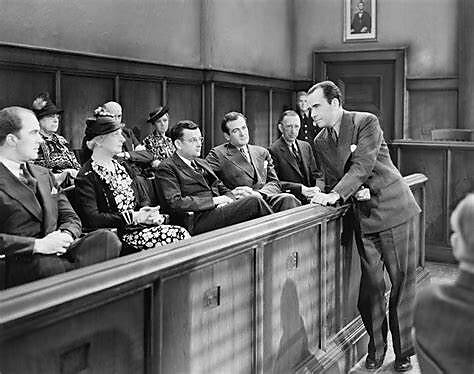
Americans rightly recoil at recent reports from Britain, where Justice Secretary David Lammy announced that criminal jury trials for offenses carrying fewer than three years behind bars will be scrapped. This disturbing move may well mark the beginning of the end of jury trials in England and Wales. But those casting judgment on the British legal system are throwing stones from a glass house. Most Americans would be stunned to learn that the United States Supreme Court has invented a nearly identical mechanism to bypass the jury box in the criminal context.
The Constitution’s text explicitly commands that the trial of “all” federal crimes be by jury, and it underscores that requirement by repeating in the Sixth Amendment that “in all criminal prosecutions” the defendant has the right to a public trial by an impartial jury in the district wherein the crime was committed. That was no accident.
The Framers, having lived under the heavy hand of British oppression and the tyranny of courts devoid of juries, enshrined this right as a fundamental circuit safeguard against government overreach. They recognized that a jury trial was a cornerstone of self-governance—a vital check on the very power they were creating. Citizen jurors were intended to be guardians against government oppression.
Yet, absent any historical foundation, the Supreme Court confected a doctrine to subvert the jury process in low-level cases. It is called the “petty offense exception,” and it stands in direct contradiction to the original understanding of our Constitution.
The doctrine finds its roots in the 1968 case of Duncan v. Louisiana, in which the Supreme Court incorporated the right to a criminal jury trial against the states. In doing so, the Court indicated that “[t]he penalty authorized for a particular crime is of major relevance in determining whether it is a serious one subject to the mandates of the Sixth Amendment.” Two years later, in Baldwin v. New York, the Court established a bright-line rule, holding that any crime with a maximum sentence of more than six months is a serious one, deserving of a jury.
But nearly two decades later, in Blanton v. City of North Las Vegas, the Court cemented the “petty offense exception,” firmly holding that if an offense carries a maximum sentence of six months or less, a jury is not required. Put another way, the Constitution’s requirement that “all crimes be tried by jury” no longer applies.
But the true absurdity of this doctrine was revealed in 1996, in Lewis v. United States. The Court ruled that even if a defendant is facing multiple petty charges, where the combined incarceration time exceeds six months, the defendant is still not entitled to a jury trial. By this logic, the government can stack petty charges against you, threaten you with years behind bars, and deny you the right to have your case adjudicated by a jury of your peers.
While states can—and often still do—provide jury trials to those charged with minor offenses, the federal government does not. And the real-world consequences of these legal gymnastics are severe.
Consider the recent case of Michelino Sunseri. Sunseri—a professional mountain runner and devout Siberian Husky dad—was charged with unknowingly running on a closed trail. Because the offense he was charged with carried a maximum of six months behind bars, his fate did not rest with a jury of his peers—as the Constitution mandates. Instead, Sunseri was convicted by a judge, herself a former prosecutor in the very same office that was now prosecuting him.
This is the exact scenario the Framers feared: the government acting as prosecutor, judge, and jury. While Sunseri was eventually pardoned by President Trump, his case represents a mere needle in a haystack.
As originally understood, the Constitution does not carve out arbitrary exceptions based on the length of a sentence. The Framers were deeply skeptical of state power and understood that when you create loopholes for minor infractions, those in power will inevitably use these “exceptions” to their advantage.
Just last term, the Supreme Court was asked to revisit the wholly unoriginalist “petty offense exception.” Unfortunately, the justices refused. Until they do, or until Congress acts, millions of Americans remain vulnerable to a system that considers their liberty petty enough to dispense with the text of the Constitution.