
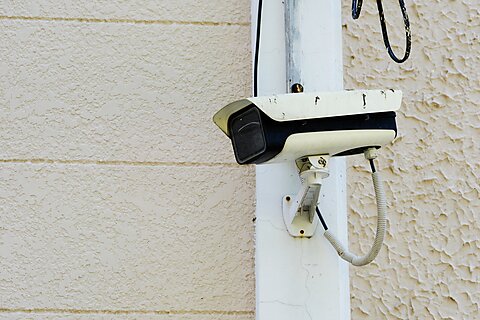
In October 2018, law enforcement surreptitiously installed two video cameras near the top of utility poles to surveil Rolando Williamson’s home. The first camera was aimed at Williamson’s front yard and “could view only what was visible from the public street in front of the house.” The second camera, however, could see over the eight‑foot privacy fence that enclosed most of Williamson’s backyard. These cameras were used to continuously monitor Williamson’s home for over ten months. The police never obtained a warrant to do this.
The resulting footage supplied probable cause to investigate and ultimately convict Williamson. On appeal, he argued that the camera surveillance constituted an impermissible, warrantless search. The Eleventh Circuit disagreed, reasoning that because one side of Williamson’s yard was “screened in by shrubbery” and not completely enclosed, he had no reasonable expectation of privacy in any of it. In the court’s view, the resulting partial visibility from an alleyway meant ten months of continuous monitoring did not count as a “search.”
Cato filed an amicus brief supporting Williamson’s US Supreme Court cert petition. Partial exposure does not automatically extinguish Fourth Amendment protections. Whether under the textual meaning of “search” under the Fourth Amendment or the reasonable-expectation-of-privacy test, targeted and prolonged surveillance of a person or their home constitutes a search. We also highlight that the practical stakes of the Eleventh Circuit’s decision are profound. Modern surveillance tools—drones, street cameras, and other sensors—allow the government to monitor millions of people with ease. Law enforcement can track movements, identify faces, record conversations—and store that information indefinitely.
The Eleventh Circuit’s decision would invite the warrantless deployment of these technologies against any part of the home considered “exposed to the public.” Such a result would enable “near-perfect surveillance” and leave citizens defenseless against long-term government observation. As the Cato brief states, “If the decision below is allowed to stand, it’s not clear what constitutional provision would prevent the creation of a permanent network of continuous surveillance that tracks Americans in public and private spaces alike.”